
Searching the Dundas Court Docket
Dundas offers no municipal docket search page of its own. The city has no public citation database either. No current form can stand in for real court records. So the docket search starts with the document in hand. Pull the ticket or citation number, the issue date, the issuing agency, the location, and the response deadline. Note the payment or appeal instructions too. Once a case has been filed, search it on Minnesota Court Records Online, known as MCRO. Select Rice as the Court Location.
- Classify the Dundas paper as a city notice, Minnesota citation, summons, or Rice court notice.
- Use the current Dundas contact printed on a city administrative notice.
- For a court document, search MCRO by complete case number, citation number, or a narrowed name search.
- Use MCRO Hearing Search or the Rice daily calendar to check a scheduled setting.
- Call Rice Court Administration if a filed-case record, old document, or access question cannot be resolved online.
MCRO splits its tools into Case, Document, Hearing, and Judgment searches. The public portal is free for the information it makes available. It is not an e-filing service, though. It cannot replace the notice itself or pay a city fine. A Dundas search that returns nothing has several possible explanations. The matter may still be administrative. It may not have been entered yet. It could be older, sit in a different venue, or be restricted from remote access.
Dundas Paper-First Court Records
For Dundas, paper comes first. That is the most useful local rule. The city fields no portal of its own. Work from the identifiers printed on the actual document rather than guessing at a city account or case lookup. A city notice should name the current office, the payment or appeal direction, and the date your response is due. A court citation usually carries a citation number. After filing, that number links to a MNCIS case number.
| Document type | Initial route | Record to preserve |
|---|---|---|
| Dundas city notice | Current contact on the notice | Ticket number, date, agency, deadline |
| Minnesota citation | MCRO, CPC, or Rice court | Citation number and court instruction |
| Court notice or summons | Rice District Court | Case number and hearing notice |
This routing matters because a city enforcement event can exist with no public court register behind it. It also keeps a police department or city administrative office from being mistaken for the clerk of the Rice court record. The city handles city business. The court holds the filed docket.
Dundas Municipal Court Basics
Dundas has no standalone municipal court docket. Minnesota routes filed Dundas-origin cases to Rice County District Court. It is part of the unified Minnesota District Court. That court handles county-filed civil, family, probate, juvenile, criminal, and traffic matters. A Dundas city administrative ticket, by itself, creates no separate municipal case. It creates no separate docket, judge, or portal. That absence is a useful answer, not a gap to fill with guesses. A city can issue an enforcement notice, but court jurisdiction begins only when the proper matter is filed. Use the city document for city administration. For the filed court record, use Rice Court Administration, at 218 N.W. Third Street, Suite 300, Faribault, reachable at (507) 497-7134.
Dundas Notice and Citation Records
A Dundas city notice, a Minnesota traffic citation, a summons, and a Rice court notice can all stem from the same local event. Each comes from a different issuer. Each carries a different court status. A citation is usually just a ticket. A summons or a court notice signals actual court process. And the citation number is not the case number. A case number exists only after the citation, complaint, or charging paper enters Minnesota's court system. Filed MNCIS identifiers for Rice carry county code 66. Synthetic examples like 66-VB-26-0000 and 66-CR-26-0000 show the number structure and nothing more. They do not prove that a Dundas notice is filed, payable, or scheduled. The full court number, or the individual notice itself, remains the reliable match.
Court Dates and Settings in Dundas
Dundas has no separate city court-calendar database. A filed Dundas case appears on the Rice daily calendar. It also shows in the MCRO hearing record. The daily calendar is a searchable PDF covering the next day. Hearing Search adds filters. Use name, complete case number, judicial officer, attorney, hearing date, category, and location. Before any scheduled appearance, check the court notice against both public sources.
| Hearing date and time | The scheduled event, which may update after public posting. |
|---|---|
| Hearing location | A courtroom, Zoom Session, or other listed connection clue. |
| Hearing type | A setting label and not the court's result. |
| Judicial officer | A public verification field, not a decision field. |
| Case number | The Rice case identifier that ties the setting to its file. |
Rice posts next-day activity at 7:00 p.m. Updates come hourly beginning at 7:00 a.m. Its warning applies directly to Dundas cases. A missing calendar entry does not mean a hearing was canceled or rescheduled. Court Administration can reconcile an individual notice against MCRO and the calendar.
Dundas Calendar Notice Checks
The Rice daily calendar lists party name, hearing location, date and time, judicial officer, hearing type, connection type, and case number. It is an operational roster, not a complete court register. Search an individual Dundas notice by case number when you can. Then confirm the hearing location and connection instruction from the served document. A Rice entry marked Zoom Session signals a possible remote hearing. The local notice or Court Administration supplies the actual connection direction. Some remote hearings leave the courtroom locked. The courthouse offers staff help plus public Zoom rooms. A Dundas city contact cannot replace that court-hearing access route.
Traffic Tickets in Dundas
Figure out who issued the paper before you chase a court record. A city administrative ticket in Dundas gets handled through the instructions printed on it. A Minnesota state traffic citation can land in MNCIS. It becomes searchable through MCRO by citation number or case number. The City of Dundas is not a court location in MCRO. Rice is the local court location once a case is filed.
Need traffic or fine details? The Minnesota Court Payment Center handles that statewide at (800) 657-3611. It is a state traffic-information line rather than a city-code office. For the court citation path, the countywide Traffic Tickets resource walks through the court record and date process. Hold onto the citation paper even if no case shows up right away. Filings sometimes take time to appear.
Dundas State Citation Chain
A state citation does not land in the court record instantly. An officer has to file or enter it first. That gap explains why your citation, a court date, and an MCRO hit may not line up on day one. Follow the printed response instruction instead of waiting for a search result to answer a deadline. When the full citation number is missing, try the court case number next. A tight MCRO name search is a fallback. Only the case number, case type, date filed, and Rice location can confirm which match is yours. A name search that comes back empty proves nothing about a Dundas enforcement matter.
Where Dundas Cases Go
Anything filed from Dundas lands in Rice County District Court. MCRO is the statewide way to reach many public court details. It covers eligible documents from home too. Filter to the Rice court location. Then check each result against its case number, title, filing date, case category, and Register of Actions. The city explains the event. It does not set the docket location.
Docket flow: Dundas city notice › current city contact on the paper; Minnesota citation or summons › Rice County District Court › Minnesota District Court record in MCRO.
Older or nonremote material may force a trip to the Rice courthouse terminal or a copy request. A protected court record can go through the Rule 8 and CON100/CON101 route instead. And a city notice never becomes publicly searchable just because filed court cases are.
Dundas MCRO Court Filters
MCRO Case Search offers Person, Business, Attorney, Case Number, and Citation Number fields. Set Court Locations to County and pick Rice for a Dundas case. Filing-date range, case category, and case status all trim a crowded result list. Case numbers work with dashes or leading zeros, but no spaces. The portal caps you at 200 results. The official case number beats any broad city-name hunt. Case Details can open a Register of Actions, case information, hearings, dispositions, financial sections, and allowed document links. Document Search requires the complete case number. There is no standalone Dundas municipal docket filter to search. For filing rather than searching, Minnesota's district-court filing entry is the official resource, separate from public MCRO case search.
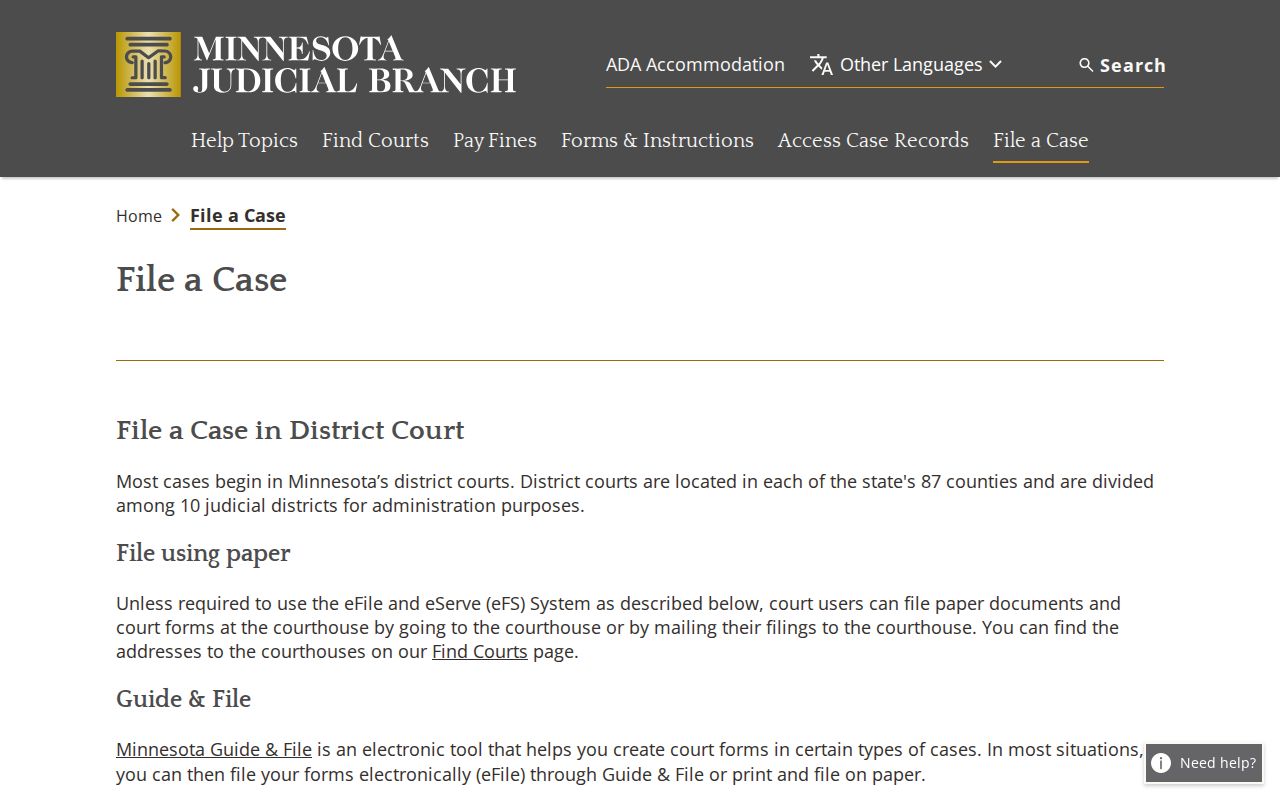
That filing page covers how a Rice court case gets started. It does not create an online Dundas city court docket.
Dundas Court Record Access Rules
Once a matter is filed in Rice District Court, Minnesota Judicial Branch rules govern access. Remote MCRO access is narrower than walking into the courthouse. Court Administration holds the local court records; city offices hold only their own administrative materials. Some items are old, excluded, or nonremote. For those, ask the Rice office about the counter, terminal, or copy-request path.
Rule 4, Rule 7, and Rule 8: Rule 4 establishes general access principles. Rule 7 permits an oral or written request that identifies the record sufficiently. Rule 8 limits remote access to protected information and distinguishes it from courthouse inspection.
A Rule 7 request can spell out the case number, party or business, event or document, date range, copy type, and delivery preference. For a confidential or sealed record, the CON100/CON101 route may open the door for a qualified requester. A blank MCRO result never licenses a workaround.
Dundas Court Record Jurisdiction
Some Dundas residents have matters in federal court. That system sits entirely apart from the Rice District Court docket. Federal schedules, locations, and CM/ECF case information will not resolve a routine Dundas city notice. Nor will they resolve a Rice state-court search. A document naming federal court is the only trigger to leave the state route. Otherwise, that route holds: city paper, MCRO, the Rice calendar, and Rice Court Administration. The U.S. District Court for Minnesota contact page belongs to that separate federal system.
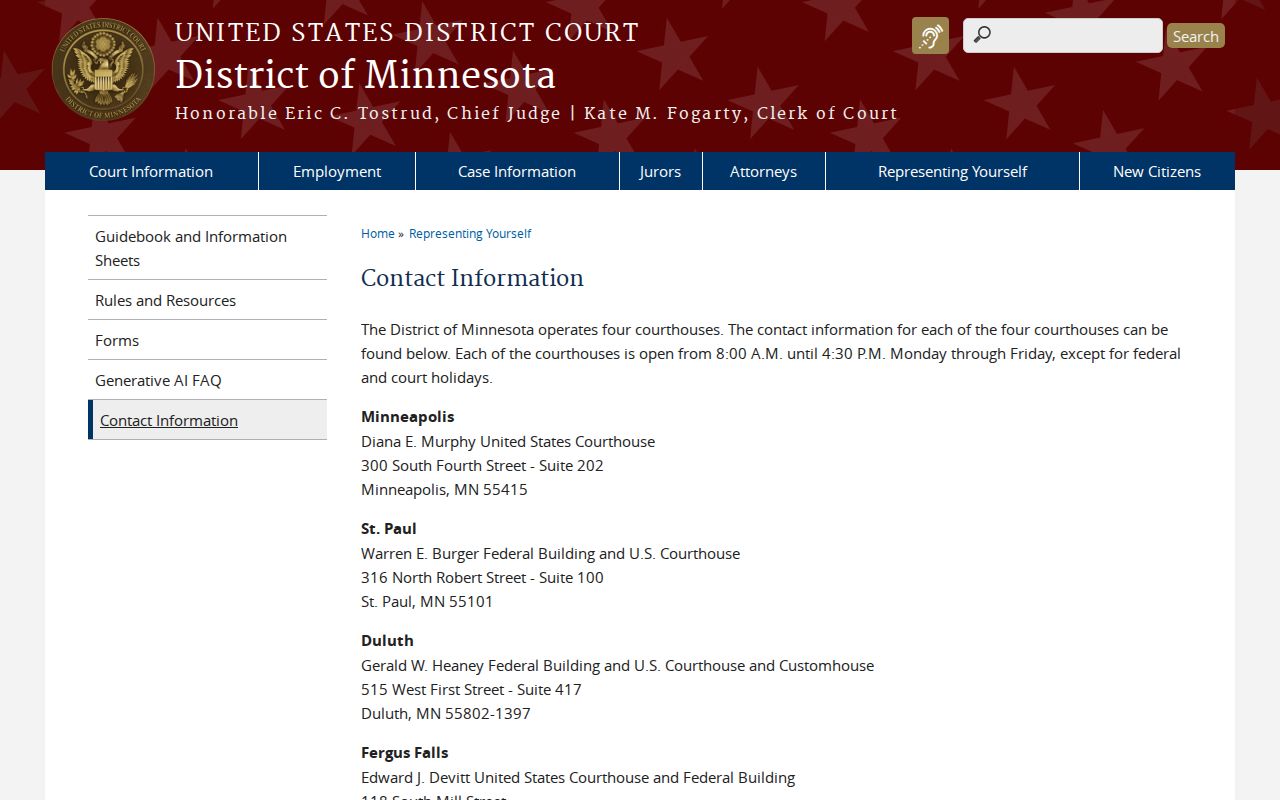
That federal contact source answers questions about a different court system. It cannot substitute for a Dundas or Rice court-record inquiry, and federal court schedules stand apart from the Rice daily calendar too.
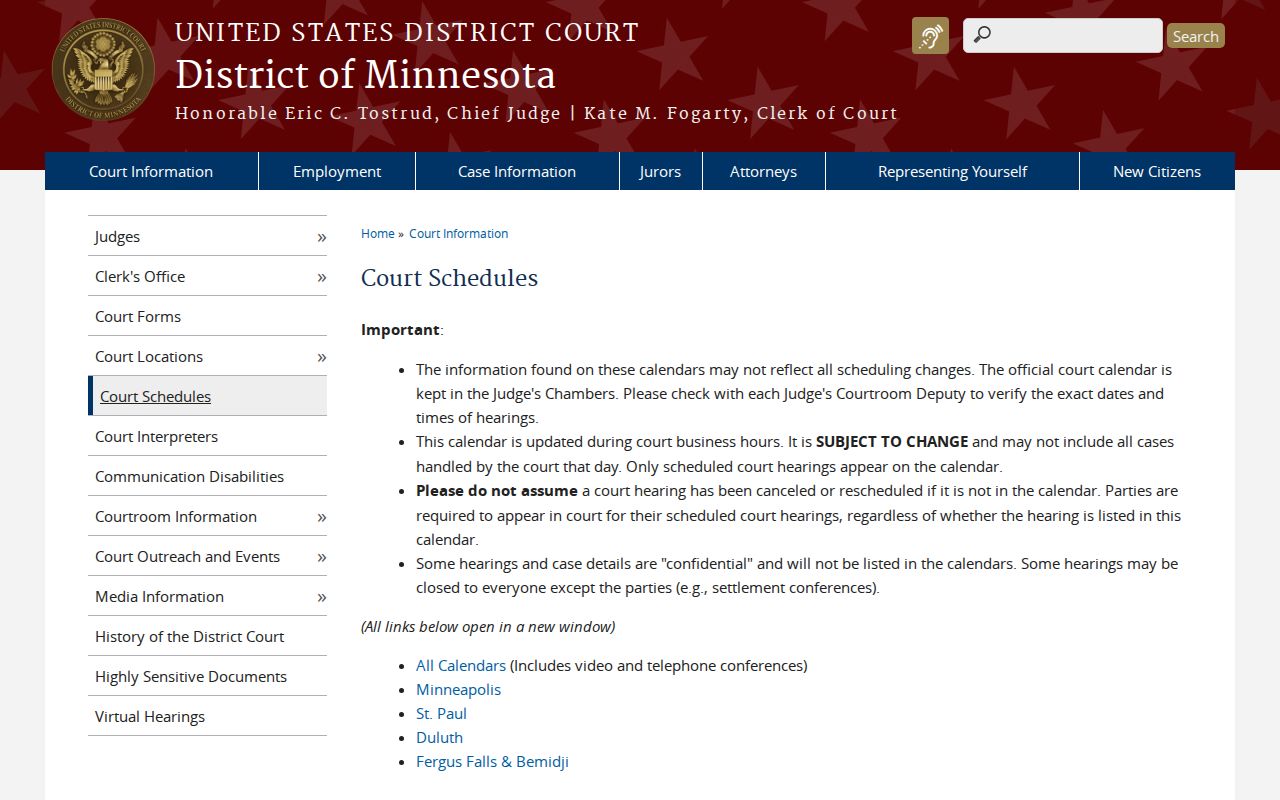
For a filed Dundas state-court matter, the Rice calendar and MCRO stay the docket resources that matter. District of Minnesota CM/ECF court information describes the federal filing system instead.
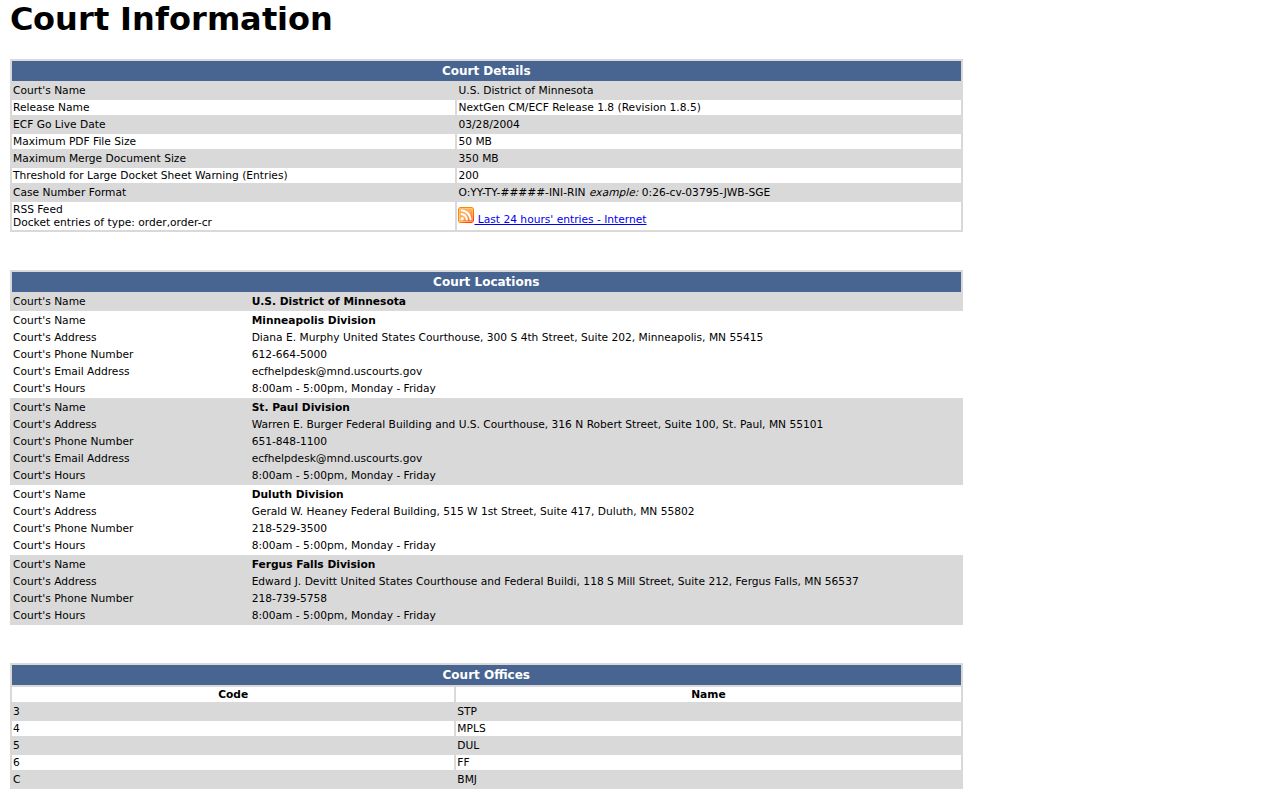
Keep federal filings separate from the Rice County court record path. That is why the CM/ECF source sits apart from MCRO. A federal case filed there will not surface in a state docket search. A missing MCRO result never means the matter is federal. Look to the court name printed on the notice itself. That name controls jurisdiction. Do not infer it from a Dundas address. Dundas court record work still runs on paper. Keep the ticket number, the issue date, the issuing agency, the response deadline, the court notice, and the case number together. Put them in one place. A city notice can stay with Dundas administration. A filed case, though, belongs with Rice Court Administration. Start with the paper in hand. Then match it to a court record through its Rice filing details. Before you search, name the paper type. A citation, a court notice, and a hearing date each travel through a different channel. Dundas city routing, citation timing, calendar checks, MCRO results, and copy requests are separate steps. Work them in order. That keeps a city matter from being mistaken for a Dundas court docket, and it sends each inquiry to the office that actually holds the record.